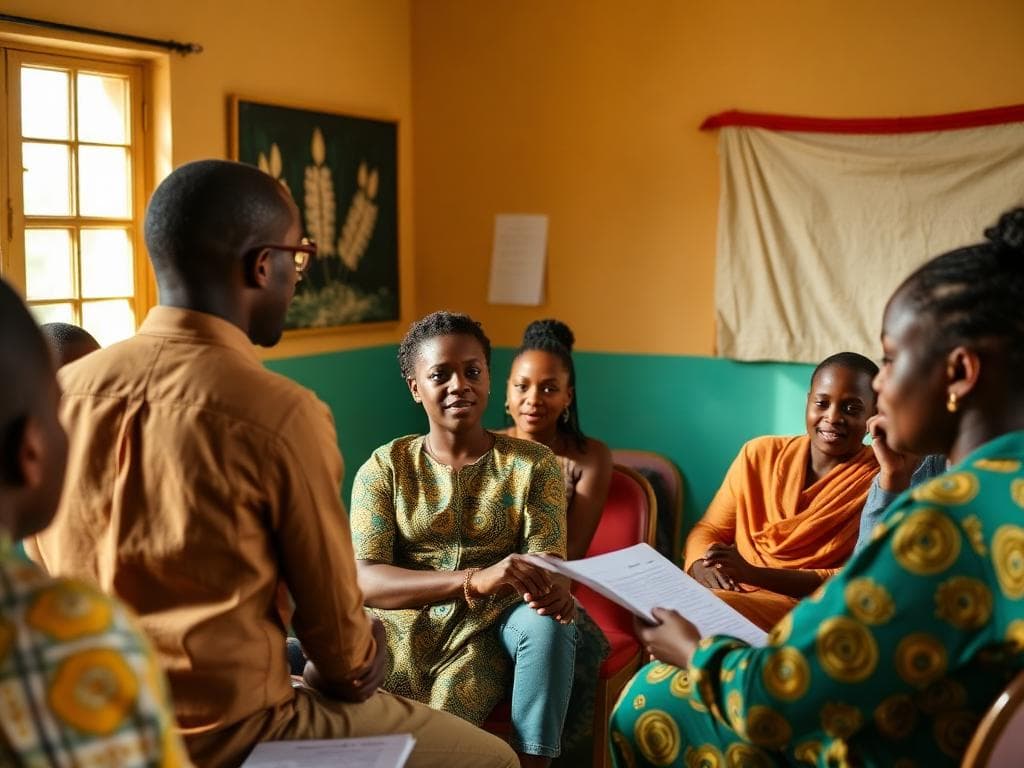
In many Nigerian communities, the voices of women and young people remain on the margins of decision-making. Despite constituting the majority of the population in most communities, women and youth are frequently excluded from leadership structures, resource allocation discussions, and the planning processes that shape their own lives. This exclusion is not just a social justice issue — it is a development failure.
Research consistently shows that communities where women and youth actively participate in decision-making have better health outcomes, stronger social cohesion, more effective disaster responses, and more sustainable development trajectories. When half the population is systematically excluded from shaping the environment they live in, the quality of community solutions suffers. Empowerment is not charity — it is smart development.
Yet the barriers to women's and youth participation in Nigeria are deeply rooted. For women, they include restrictive gender norms that assign them to domestic roles, limited access to education and skills training, economic dependence on male household members, and cultural prohibitions on women speaking in formal community spaces. For young people, the barriers include age hierarchies that dismiss their contributions as inexperienced, lack of capital to pursue economic opportunities, and few structured pathways to community leadership.
COMPSEI's empowerment programs work at multiple levels simultaneously. At the individual level, we provide skills training and vocational development that equip women and youth with practical tools for economic independence. At the community level, we facilitate dialogues that challenge restrictive norms, create safe spaces for women and youth to practice leadership, and work with traditional and community leaders to expand who has a seat at the table.
One of our most impactful interventions is the establishment of community-based safe spaces — dedicated meeting environments where women and youth can gather, share experiences, receive skills training, and develop collective action plans without the social pressures that often inhibit their participation in mixed or male-dominated settings. These spaces become incubators for leadership. Participants who gain confidence and skills in these environments gradually bring their voices into broader community structures.
Our youth programs also recognize that young people are not just the future — they are the present. Young people in Nigerian communities are often the first to understand emerging challenges, whether related to technology, climate change, or shifting social dynamics. Programs that invest in young people's analytical and leadership capacities build the resilient, adaptive community leadership that will navigate the challenges of coming decades.
The stories emerging from COMPSEI's empowerment programs are evidence of transformation. Women who once felt invisible in community meetings are now coordinating community health campaigns. Young men and women who had no clear pathway to contributing to their communities are now facilitating peer support groups, leading environmental conservation activities, and advocating for policy changes that affect their lives. Community empowerment, done right, is one of the most powerful levers for sustainable development available to us.