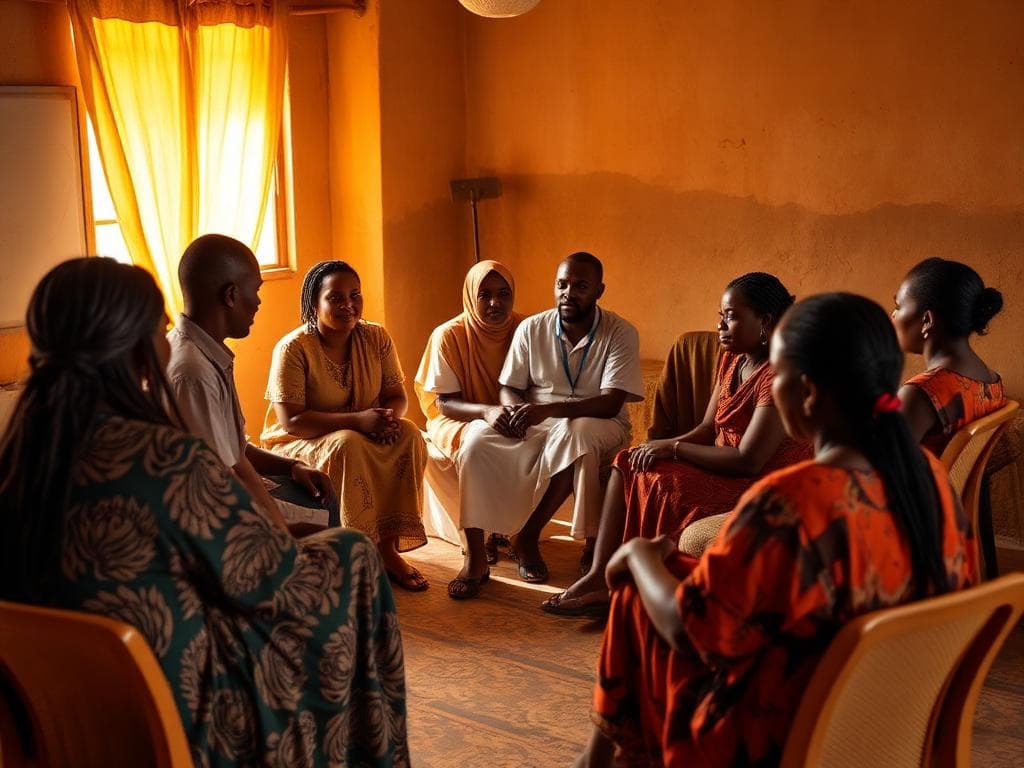
Psychosocial support (PSS) is a term that encompasses a broad range of activities designed to protect and promote mental health, strengthen social ties, and support individuals through difficult times. In contexts of poverty, conflict, displacement, and environmental stress — all of which are realities for many Nigerian communities — PSS is not a luxury. It is a lifeline.
At its core, psychosocial support recognizes that human beings are not just physical bodies. Our emotions, relationships, sense of belonging, and mental state are inseparably linked to our overall health and capacity to function. When these are disrupted by trauma, grief, chronic stress, or social exclusion, the effects ripple outward through families and communities.
In Nigeria, the landscape of mental health is complex. According to the World Health Organization, Nigeria has one of the highest burdens of mental health conditions in sub-Saharan Africa, with an estimated 20–30% of the population experiencing some form of mental health challenge. Yet mental health services remain grossly underfunded, under-resourced, and inaccessible to the majority of Nigerians, especially those in rural and underserved communities.
Compounding this is the deep cultural stigma surrounding mental illness. In many Nigerian communities, psychological distress is often attributed to spiritual causes, moral failure, or family shame. This stigma prevents individuals from seeking help, forces families to hide their struggles, and allows preventable suffering to continue unchecked.
This is where community-based psychosocial support makes a profound difference. Rather than waiting for people to walk into clinics — which many cannot access — PSS brings care directly to communities. Trained community volunteers and facilitators offer listening circles, peer support groups, and psychoeducation sessions in familiar, accessible spaces: community halls, market squares, places of worship, and schools.
COMPSEI's approach to PSS is grounded in the understanding that communities already possess remarkable resilience and coping capacity. Our role is not to come in as outside experts who know better, but to strengthen what already exists, provide structured support, and create safe spaces for people to share, heal, and grow together.
Key elements of community-based PSS include psychological first aid (PFA), which equips ordinary people to provide compassionate, non-judgmental support during crises; peer support groups, which create regular spaces for individuals facing similar challenges to share experiences and coping strategies; and psychoeducation, which helps communities understand mental health, reduce stigma, and recognize warning signs that require professional referral.
The results are tangible. Communities that have engaged with COMPSEI's PSS programs report reduced isolation, improved coping with stress, greater willingness to discuss mental health openly, and stronger social cohesion. When people feel seen, heard, and supported, they become better equipped to navigate the challenges life throws at them — and better able to support others in turn.
Psychosocial support is not a replacement for professional mental health services. It is the foundation — the first layer of a continuum of care that helps communities cope, recover, and thrive. For Nigerian communities facing the compounding pressures of poverty, climate change, and social disruption, that foundation has never been more urgently needed.